Why the People Who Disagree With You Are the Ones You Actually Need

There's a version of collaboration that feels really good and produces pretty mediocre work. You know the one — everybody's vibing, nobody's arguing, ideas flow fast because everyone's already on the same page. It's comfortable. It's efficient. And it almost never makes anything remarkable.
The more you dig into the history of creative work that actually moved people — films that stuck around, albums that defined a decade, visual projects that changed how we see things — the more you find the same uncomfortable pattern. The people making that work weren't necessarily friends. They weren't always aligned. A lot of the time, they were actively frustrating each other. And somehow, that friction was the whole point.
The Mirror Problem
When you surround yourself with collaborators who think the way you think, you're essentially building a very expensive echo chamber. Every idea you bring gets validated. Every instinct gets affirmed. It feels productive because the feedback loop is fast and frictionless. But what you're actually doing is removing the one thing that forces creative growth: resistance.
This is what you could call the mirror problem. When your collaborators reflect your perspective back at you, you never have to confront the limits of that perspective. You can't see the blind spots in your own vision when everyone around you shares those same blind spots. The work gets tighter and tighter around a single point of view until it loses the texture and tension that makes audiences lean in.
This isn't a personality flaw. It's just how human beings are wired. We seek out people who confirm what we already believe because it's cognitively easier. But easier rarely makes for better art.
What Complementary Actually Means
Here's where people sometimes get this wrong: finding a collaborator who challenges you doesn't mean finding someone who just argues with everything. That's not friction — that's noise. The distinction matters.
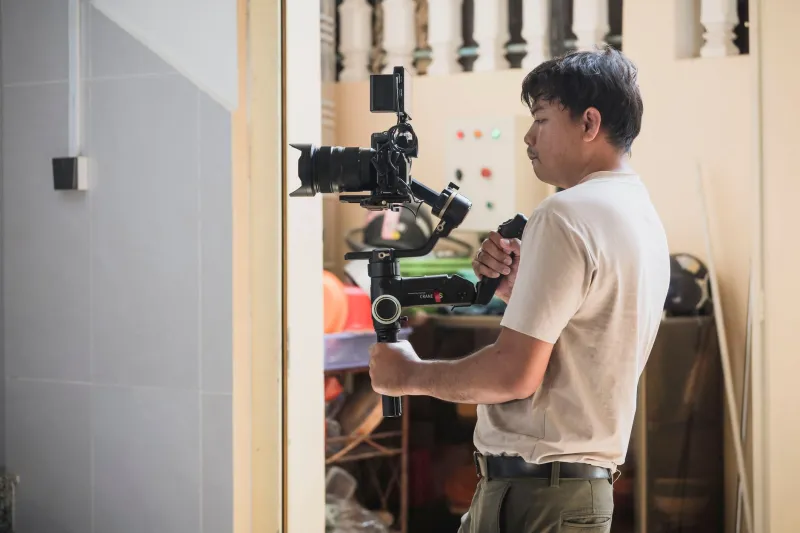
A genuinely complementary collaborator brings a different kind of intelligence to the table, not just a contrarian attitude. Think about the classic dynamic between a director and a cinematographer. The director is thinking in narrative, in emotion, in the arc of a story. The DP is thinking in light, in geometry, in what the camera can physically do. These aren't opposing forces — they're different languages describing the same creative goal. The tension between them produces something neither one could get to alone.
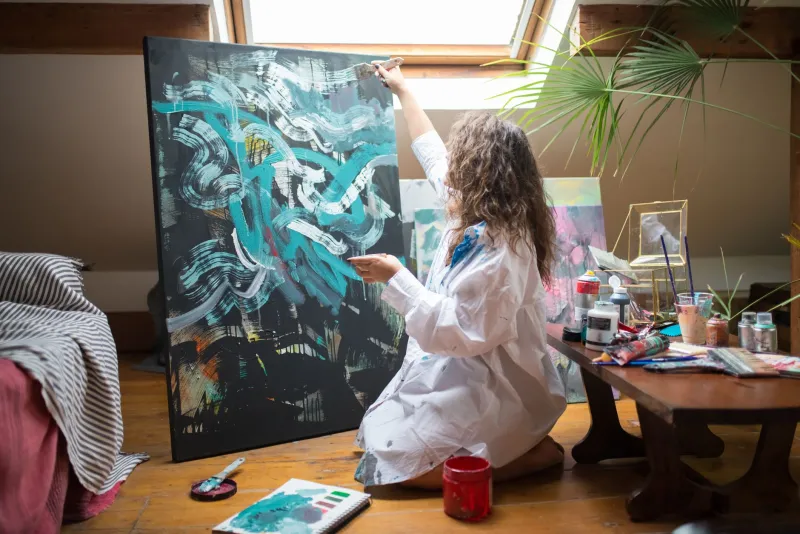
The same principle shows up in multimedia work all the time. A visual artist who thinks almost entirely in image and composition paired with a writer who thinks in rhythm and subtext creates a different kind of output than two visual artists working together. The overlap is smaller, which means the conversation has to be more deliberate. And that deliberateness — that extra effort required to actually communicate across different frameworks — is often where the interesting stuff lives.
Case Study: The Friction That Built Something Better
Consider what happened during the production of almost any Coen Brothers film. Joel and Ethan Coen have famously different instincts — Joel tends toward the visual and cinematic, Ethan toward the literary and tonal. Neither one completely dominates the other, and the result is a body of work that doesn't fit cleanly into any single box. The friction between their sensibilities is literally the aesthetic.
Or look at the long creative partnership between directors and editors who fundamentally disagree about pacing. The editor who keeps pushing a director to cut faster than feels comfortable is doing something essential — they're representing the audience's attention span against the director's attachment to their own footage. That conflict, when it's healthy and grounded in mutual respect, produces tighter, more honest work than either person would make solo.
The pattern repeats across disciplines. Tension between collaborators, when it's productive rather than destructive, consistently generates outcomes that homogeneous teams don't reach.
How to Actually Find These People
So how do you identify the collaborators who will challenge you in the right ways rather than just make the whole process miserable?
Start by paying attention to where your instincts feel most certain. The areas where you're most confident — where you'd least expect to be questioned — are exactly where you need someone who sees it differently. If you're a filmmaker who's deeply comfortable with visual storytelling but treats sound design as an afterthought, you need a sound collaborator who considers audio primary, not supplemental. Their priorities will feel foreign to you. That's the point.
Look for people whose work makes you feel a slight competitive discomfort. Not jealousy exactly — more like the feeling that they're doing something you don't fully understand and couldn't easily replicate. That gap between your skillset and theirs is where the collaboration gets interesting.
Also, pay attention to how someone responds to your ideas in early conversation. A collaborator who immediately agrees and builds on everything you say might be enthusiastic, but they might also just be agreeable. The person who pauses, asks a clarifying question, or gently suggests that a different approach might work better? That person is already doing the work that good collaboration requires.
Managing the Tension Without Losing the Vision
None of this means you should manufacture conflict or work with people who fundamentally don't respect your creative perspective. There's a real difference between productive friction and just constant fighting. The key variable is shared purpose.
When two collaborators with very different instincts are both genuinely committed to making the work as strong as it can be — not to winning the argument, not to protecting their own contribution, but to the actual outcome — disagreement becomes a tool rather than an obstacle. Every pushback is information. Every alternative perspective is a test of whether your original instinct was actually right or just familiar.
The practical framework is simple but requires discipline: separate the conversation about what you're trying to achieve from the conversation about how to get there. Get aligned on the goal first. Then let the disagreement about method run freely. That structure gives the friction somewhere useful to go.
The Uncomfortable Takeaway
If your creative partnerships have always felt easy and harmonious, that's worth examining. It might mean you've built an unusually healthy and functional team. Or it might mean you've quietly curated a group of people who won't challenge you — and that the most interesting version of your work is still waiting to be made.
The collaborators who make you a little uncomfortable, who ask questions you don't immediately have answers to, who bring frameworks you haven't thought through — those are the people worth pursuing. Not because difficulty is inherently valuable, but because growth almost never happens inside a comfort zone, and neither does the kind of work that actually lasts.