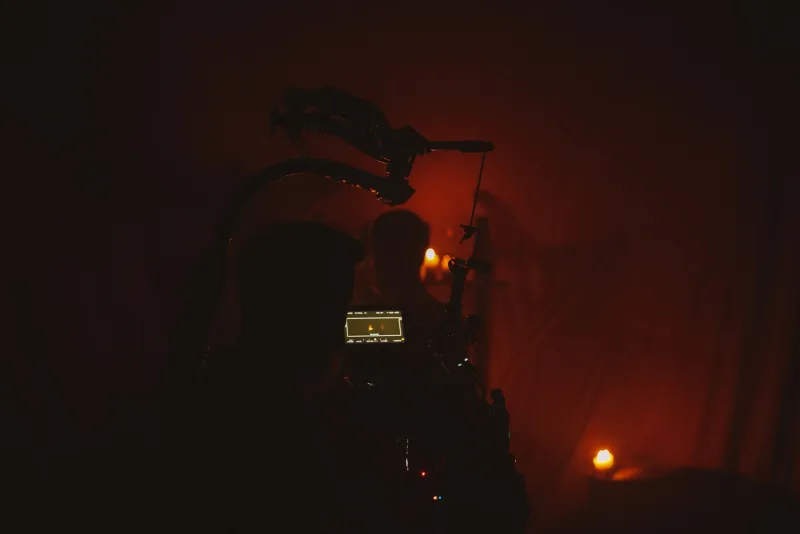
The Ground Beneath the Story: What Location Scouting Really Teaches You About Your Film
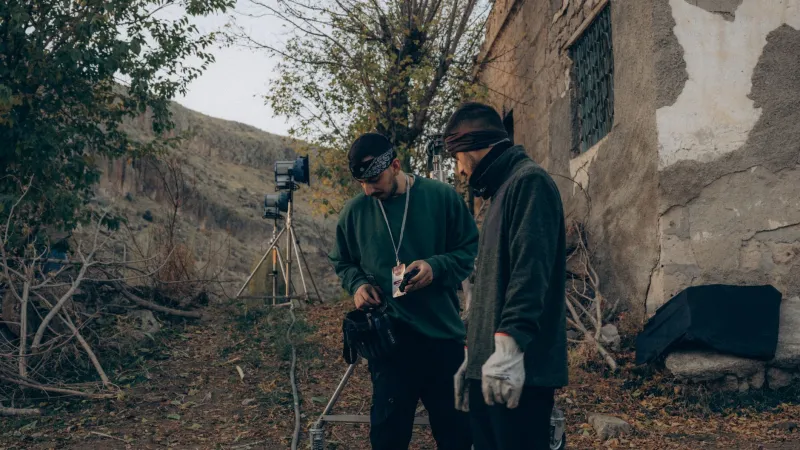
There's a moment that happens on almost every scout. You've been carrying a version of your film around in your head for weeks, maybe months. You've got a rough idea of what things should look like, how scenes should feel, what kind of light you're chasing. Then you walk into an actual space — a diner, a warehouse, a stretch of highway outside of Tulsa — and the whole thing shifts. Sometimes it breaks open in the best possible way. Sometimes you realize the film you thought you were making doesn't quite exist yet.
That moment isn't a problem. That's the work.
Location scouting gets treated like a production task — something the line producer handles, a box to check before the real creative decisions get made. But if you're a filmmaker who's paying attention, scouting is one of the most generative parts of the entire process. It forces a confrontation between the movie in your imagination and the physical world that movie will have to live in. And that confrontation, uncomfortable as it sometimes is, tends to make the film better.
Your Script Is a Theory. Locations Are the Reality Check.
When you write a scene set in a character's apartment, you're writing a theory about who that person is. You're imagining a space. But the moment you start walking through actual apartments — in actual neighborhoods, with actual light coming through actual windows — your theory gets tested.
Maybe the cramped Brooklyn walk-up you find tells you more about your character's financial anxiety than three pages of dialogue ever could. Maybe the weirdly pristine suburban ranch house in Phoenix says something about denial and performance that you hadn't consciously written but absolutely meant. Spaces carry meaning before you put a camera in them. The scout is when you start learning what meanings are available to you.
This is why location decisions aren't just logistical — they're narrative. The choice of where a scene lives affects what the scene can say.
The Scout Changes What You Thought You Needed
Here's something that doesn't get talked about enough: scouting regularly rewrites casting assumptions.
You picture a certain type of actor in a certain type of space. Then the space turns out to be something different — smaller, rougher, more specific — and suddenly the character you thought you were telling the story about doesn't quite fit the world you've found. Or the opposite happens: a location is so particular, so alive, that it demands a performer who can hold their own against it. The space raises the bar.
Cinematography shifts too. A DP who's been mentally building a shot list based on your location references and mood boards has to rebuild the moment they step into the actual space. The ceiling's too low for the crane. The windows face east, not west, which means your golden hour is actually your morning call. The hallway that looked wide in photos is actually a corridor that forces a different kind of intimacy. None of that is a setback — it's information. And the cinematographers who thrive are the ones who treat that information as creative input rather than obstruction.
Pacing Lives in the Architecture
One of the less obvious ways location shapes a film is through rhythm. The physical dimensions of a space — how long it takes to cross a room, how sound behaves in a stairwell, how the eye moves through an exterior — all of that feeds directly into pacing.
A scene that plays as a slow burn in a cavernous industrial space might feel suffocating and urgent in a tight kitchen. The edit changes. The performance changes. The score has different room to breathe. When you find a location that has its own internal rhythm — a space that seems to move at a certain speed — you've found something worth protecting. The best location scouts aren't just looking for a place that fits the scene. They're looking for a place that has a pulse.
The Assumptions You Don't Know You're Making
Maybe the most valuable thing about getting out and scouting early is that it surfaces your unconscious assumptions before they get baked into the production.
Every filmmaker walks into a project with a head full of references — films they love, images they're chasing, aesthetic instincts built up over years of watching and making work. Those references are useful. They're also a trap if you hold them too tightly. When you scout, you're forced to compare your reference image against the real thing. And sometimes the real thing is better. Sometimes it's completely different and better in a way you didn't know to look for.
The filmmaker who insists on finding the location that matches their reference image exactly is often the filmmaker who ends up with something that feels like a copy of something else. The filmmaker who lets the real world push back a little — who's willing to be surprised — often ends up with something that feels like theirs.
Scouting as a Creative Philosophy
At its best, location scouting is a way of staying humble in front of the work. It's an acknowledgment that the film doesn't fully exist in your head — it exists out there somewhere, waiting to be found and then built.
That's not a passive stance. You're still making decisions. You're still applying taste and judgment and vision. But you're doing it in conversation with the real world rather than in spite of it. And that conversation — between your intentions and the physical reality of the spaces available to you — is where a lot of the most interesting filmmaking actually happens.
So yeah, get out early. Walk the spaces before you've locked anything. Let a location tell you something you didn't expect to hear. The film you make after that conversation is almost always more interesting than the one you would've made without it.
The ground beneath the story matters. Go find it.